What is a Quitclaim Deed in Florida and When Should You Use One?

A Florida quitclaim deed transfers whatever interest the grantor has in real property — and only that interest — with no warranties or guarantees of title. If the grantor owns the entire fee simple, the grantee receives the entire fee simple. If the grantor owns nothing, the grantee receives nothing, and the grantee has no legal recourse against the grantor.
That single legal feature — the absence of warranties — is what makes quitclaim deeds the right tool for some Florida real estate transactions and the wrong tool for most others. Section 689.025, Florida Statutes provides a statutory form and the formal requirements every Florida quitclaim deed must satisfy to be valid and recordable.
Quitclaim, Warranty, and Special Warranty Deeds Compared
Florida recognizes three primary deed types for transferring real property:
| Deed Type | Warranties | Typical Use |
| General Warranty Deed | Grantor warrants clear title against all claims, including those predating ownership | Standard arms-length sales |
| Special Warranty Deed | Grantor warrants clear title only for the period of grantor’s ownership | Commercial sales, REO transactions |
| Quitclaim Deed | None | Family transfers, trust funding, divorce decrees, title cures |
All three transfer ownership when properly executed and recorded. The difference is what happens if a title problem surfaces afterward. With a warranty deed, the grantor is on the hook to make the grantee whole. With a quitclaim, the grantee bears the entire risk.
When a Quitclaim Deed Is the Right Tool
Adding or removing a spouse from title. Newlyweds putting both names on a homestead. Spouses transferring interests under a divorce decree under Chapter 61. Both are clean quitclaim use cases.
Funding a revocable living trust. Moving Florida real estate into your own trust. The grantor and the grantor’s trust are functionally the same party — warranties to oneself serve no purpose. Our overview of probate avoidance covers this strategy in context.
Family transfers. Parents adding adult children to a deed. Siblings consolidating ownership of inherited property. Grandparents conveying a vacation home. Title history is already known to all parties.
Clearing a cloud on title. Heirs releasing potential interests when an old recorded interest is muddying the chain. Title companies frequently request quitclaims as a condition of issuing a clean policy.
Transfers between affiliated entities. Moving real estate between LLCs under common ownership. Transferring out of a sole proprietorship into a single-member LLC for liability purposes.
When a Quitclaim Deed Is the Wrong Tool
Buying from a stranger or arms-length seller. Demand a warranty deed and a title insurance policy. A quitclaim leaves the buyer with no recourse if title turns out to be defective.
Property with an existing mortgage. Most mortgages contain a due-on-sale clause. Transferring title without lender consent — even by quitclaim — can technically trigger acceleration of the loan. Lenders rarely enforce the clause unless the loan is already in default, but the risk is real.
Dodging known creditors. A quitclaim executed to defeat existing creditors can be unwound as a fraudulent transfer under Florida’s Uniform Voidable Transactions Act, Chapter 726.
Transactions requiring title insurance. Many Florida title underwriters will not issue a policy on a transaction that closes by quitclaim alone, because they have no warranty to subrogate against if a defect surfaces.
Florida’s Formal Requirements for a Valid Quitclaim Deed
Section 689.025 prescribes a statutory form, and Sections 689.01 and 695.26 establish execution and recording requirements. To be valid and recordable in Florida, a quitclaim deed must include:
- The full legal names and mailing addresses of the grantor and grantee
- The legal description of the property — not just the street address
- The property appraiser’s parcel identification number (also called the folio or PIN)
- The consideration paid, even if nominal (commonly stated as “$10 and other good and valuable consideration”)
- The grantor’s signature
- Two subscribing witnesses, who sign in the grantor’s presence
- The post office address of each witness — required on quitclaim deeds executed on or after January 1, 2024
- A notary public’s acknowledgment
- The name and address of the person who prepared the deed
- A 3-inch by 3-inch blank space on the upper right of the first page for the clerk’s recording information
The notary may serve as one of the two witnesses, but a second separate witness is still required. If two co-owners are conveying their interests as co-grantors, four total witnesses are required — two for each grantor’s signature.
The grantee does not sign.
The Florida Homestead Spouse-Signature Rule
If the property is the grantor’s homestead and the grantor is married, the non-owner spouse must also sign the deed, even if the non-owner spouse has no recorded ownership interest. This requirement comes from Article X, Section 4 of the Florida Constitution, which restricts the alienation of homestead property when the owner is married. A homestead quitclaim missing the spouse’s signature is constitutionally void.
This is the single most overlooked requirement on quitclaim deeds Floridians try to draft themselves. The county clerk records the deed anyway because clerks do not screen for legal sufficiency — but the grantee receives no valid title.
Documentary Stamp Tax on Quitclaim Deeds
Florida charges documentary stamp tax on most real estate transfers under Chapter 201:
- $0.70 per $100 of consideration in 67 Florida counties
- $0.60 per $100 in Miami-Dade for single-family residential
- $0.45 per $100 Miami-Dade surtax for non-single-family transfers
Common pitfalls:
- Adding a spouse to homestead with no consideration is generally exempt — provided no mortgage is being assumed.
- Property subject to a mortgage generates doc stamps on the mortgage balance as consideration, even if no cash changes hands. A house with a $300,000 mortgage transferred for “love and affection” still owes $2,100 in doc stamps in non-Miami-Dade counties.
- Transfers between an individual and that individual’s revocable trust are generally exempt — but the deed must be drafted to reflect that.
- Documentary stamps on mortgages themselves (separate from deeds) are $0.35 per $100 of the mortgage amount.
Get the doc stamp analysis wrong and the recorder will refuse to record until the correct tax is paid — or worse, will record and leave you to settle up later when the Department of Revenue audits.
Recording Fees and Mechanics
Recording happens with the clerk of the circuit court in the county where the property sits. Fees:
- $10.00 for the first page
- $8.50 for each additional page
- Plus the documentary stamp tax calculated above
Recording is not legally required for the deed to be effective between grantor and grantee — delivery is what completes the transfer under Florida law. But an unrecorded deed loses priority to a later buyer or lien holder who records first under Florida’s recording statute. Always record.
Some Florida counties also require a Self-Addressed Stamped Envelope (SASE) so the clerk can mail the recorded original back to the grantee.
Remote Online Notarization (RON) for Florida Quitclaim Deeds
Florida law permits Remote Online Notarization for quitclaim deeds under Chapter 117. The grantor signs electronically while a Florida-commissioned online notary witnesses the signature via audio-visual technology. Identity is verified through credential analysis and knowledge-based authentication. The completed deed is then printed and recorded in the same way as a paper deed. RON is widely used for out-of-state grantors, snowbirds, and any situation where in-person execution is impractical.
Quitclaim Deed vs. Lady Bird Deed
If the goal is transferring property at death rather than during life, a quitclaim is rarely the right answer. Florida’s enhanced life estate deed — the Lady Bird deed — lets the owner transfer real estate at death while retaining full control during life, including the right to sell, mortgage, or revoke. A Lady Bird deed accomplishes very different goals than a quitclaim and avoids triggering due-on-sale clauses, capital gains step-up issues, and Medicaid look-back problems.
What If There’s a Mistake After Recording?
The clerk does not review deeds for legal sufficiency. A deed missing a witness signature, with a wrong legal description, or with an invalid homestead transfer will be recorded — and now you have a recorded mistake on the chain of title. Two cures:
- Corrective deed. A new deed identifying itself as a corrective deed, fixing the error, and signed by the grantor again. Recorded as a separate instrument.
- Quiet title action. A circuit court lawsuit asking the judge to clear the title. Required when the grantor refuses to cooperate, has died, or cannot be located.
Both cost more than getting the deed right the first time.
Frequently Asked Questions
Does a quitclaim deed remove someone from the mortgage? No. A quitclaim transfers ownership but does not affect the loan. The original borrower remains liable unless the lender releases them, which usually requires a refinance.
Can a notary in Florida notarize a quitclaim deed? Yes. A Florida-commissioned notary can notarize a quitclaim deed. The notary may also serve as one of the two required witnesses, but a separate second witness is still required. Florida also permits Remote Online Notarization through state-approved platforms.
Can a quitclaim deed be reversed? Once signed, witnessed, notarized, delivered, and recorded, a quitclaim transfers ownership permanently. It can only be undone if the grantee voluntarily deeds it back, or if a court rescinds it for fraud, duress, undue influence, or lack of capacity.
Is an attorney legally required for a Florida quitclaim deed? No — but the small drafting cost catches the mistakes that cause real problems: bad legal descriptions, missing homestead spouse signature, wrong doc stamp tax, missing post-2024 witness address, and accidentally triggering a mortgage acceleration. Florida title underwriters often require attorney-prepared deeds for transactions involving title insurance.
How much does it cost to record a Florida quitclaim deed? Recording fees are $10.00 for the first page and $8.50 per additional page. Most quitclaim deeds are one or two pages. Add the documentary stamp tax: $0.70 per $100 of consideration in most counties, applied to the mortgage balance if the property is encumbered. A typical unencumbered family transfer costs under $30 to record.
Does a quitclaim deed avoid probate? Only if it transfers ownership before death. A signed-but-undelivered quitclaim deed is generally ineffective. For probate avoidance, a Lady Bird deed or a properly funded living trust is almost always the better tool.
What’s the difference between a quit claim deed and a “quick claim” deed? There is no such thing as a “quick claim” deed — it’s a common misspelling of quitclaim. The deed type is “quitclaim,” from the Old English word “quit” meaning to release.
Do I need title insurance with a quitclaim deed? You can purchase an owner’s title insurance policy when you accept a quitclaim, but most underwriters will require a title search and may decline coverage if defects exist. Title insurance is most useful for arms-length warranty deed transactions, not quitclaim transfers between trusted parties.
Get a Florida Quitclaim Deed Drafted Properly
Most quitclaim problems we see in our Oviedo office trace back to deeds pulled from the internet — bad legal descriptions, missing post-2024 witness addresses, missing homestead spouse signature, wrong doc stamp tax, title clouds discovered years later when the family tries to sell. Vollrath Law’s real estate attorneys draft, witness, notarize, and record Florida quitclaim deeds every week — including RON closings for out-of-state grantors. Reach out and we’ll handle yours.
Author Bio
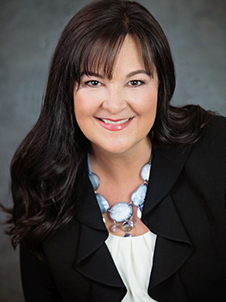
Stephanie Vollrath is an Owner and Partner of Vollrath Law, a Florida estate planning law firm she founded in 2013. With more than seven years of experience in investments and financial advising and 13 years practicing law in Florida, she represented clients in a wide range of estate planning cases. Her practice areas include wills, trusts, guardianship, probate, and other estate planning matters.
Stephanie received her Juris Doctor from the Barry University Dwayne O. Andreas School of Law and is a member of the Florida Bar and the Seminole County Bar Association.