Estate Planning

A trust is one of the most useful tools in estate planning, and also one of the most misunderstood. Set up well, a trust keeps your affairs private, spares your family the cost and delay of probate court, and makes sure the people you love are cared for exactly the way you intend. Set up poorly, or left unfunded, it can create a false sense of security that falls apart when it matters most.
Vollrath Law has helped Oviedo and Seminole County families plan with trusts for more than 25 years. We explain your options in plain language, build a trust that actually fits your family and your assets, and make sure it is done right down to the funding step that so many plans miss. You can reach our Oviedo office by calling or requesting a free consultation online.
Trusts in Florida are governed by the Florida Trust Code, Chapter 736, and the details matter. A document you download from a template site may not meet Florida requirements, may not be funded, and may not do what you think it does. A local trust lawyer makes sure your plan is valid under Florida law, coordinates it with your home, your accounts, and your beneficiaries, and is here to help your family when the trust is actually needed.
Because we also handle estate planning, wills, probate, and real estate, we see the whole picture and make sure your trust works with the rest of your plan instead of against it.
There is no single trust that fits everyone. The right one depends on your goals, your assets, and your family. These are the types of trusts we most often prepare.
A trust is not just for the wealthy. It tends to make the most sense for families in these situations.
This is the first fork in the road for most people, so here is the plain-language difference.
A revocable trust stays fully under your control. You can add or remove assets, change beneficiaries, or cancel it entirely while you are alive and competent, a right protected by Fla. Stat. § 736.0602. Its main job is to avoid probate and to manage your assets smoothly if you become incapacitated. Because you still control the assets, a revocable trust does not shield them from your creditors or reduce your taxable estate.
An irrevocable trust generally cannot be changed once it is created, and you give up direct control of the assets you place in it. In exchange, those assets can be protected from creditors and, depending on the structure, kept out of your taxable estate or positioned for long-term care planning. The tradeoff is control for protection.
Neither is better in the abstract. The right answer depends on what you are trying to protect and what you are willing to give up, which is exactly the conversation we have with you.
Irrevocable trusts are a planning tool, not a default, but in the right situation they do things a revocable trust cannot.
A revocable living trust is the workhorse of Florida estate planning. You create the trust, move your assets into it, and name yourself as trustee so nothing about your day-to-day changes. When you pass away, a successor trustee you chose distributes everything according to your instructions, without the court involvement that a will alone requires.
For a trust to be valid, Fla. Stat. § 736.0402 requires that you have capacity, that you clearly intend to create the trust, that there is a definite beneficiary, and that the trustee has real duties to perform. Meeting those requirements is the easy part. The part people miss is funding.
A trust only controls the assets you actually transfer into it. Signing the document is not enough. Your home has to be deeded into the trust, and your accounts have to be retitled or given beneficiary designations that line up with your plan. An unfunded trust is one of the most common and most expensive mistakes we see, because the assets you left out can still end up in probate. We handle funding as part of the engagement so your plan works the way you expect. For a fuller picture, see how to avoid probate and which assets avoid probate in Florida.
Beyond avoiding probate, a living trust keeps your affairs private, since probate is a public record and a trust is not. It also lets your successor trustee step in if you become incapacitated, without a court guardianship. If you are wondering who actually controls the assets along the way, our guide on who owns the property in a revocable trust walks through it. And yes, you can update it, as we explain in can a trust be changed in Florida.
A will and a trust are not an either-or choice for most families, they work together. A will directs who receives your assets and names guardians for minor children, but it has to go through probate to take effect. A trust can pass assets outside of probate and take effect the moment it is needed. Many of our clients use a trust as the core of their plan with a pour-over will as a backstop.
If you want to dig into the comparison, we cover it in trust vs will and who needs a trust instead of a will. For homeowners who mainly want to keep the house out of probate, a Florida lady bird deed can sometimes do the job more simply, and we will tell you honestly when that is the better fit.
A trust is powerful, but it is one piece of a plan, not the whole thing. A complete Florida estate plan usually also includes a durable power of attorney, a health care surrogate, and a living will, which we handle through our advanced directives practice. Together these documents cover both what happens to your assets and who speaks for you if you cannot speak for yourself, a topic we cover in incapacity planning.
If you are just getting started, our estate planning process and estate planning checklist are good first reads, and our broader Oviedo estate planning page shows how it all fits together.
Our work does not end when the trust is signed. Life changes, and so should your plan. We help you amend a revocable trust when your family or goals change, and we guide successor trustees through administering a trust after a loved one passes, including their duties to beneficiaries and the practical steps involved. When a home is held in trust, it generally passes to your beneficiaries without probate, which we explain in do you have to go through probate if the house is in a trust.
A trust costs more up front than a simple will, and clients often ask whether it is worth it. The honest answer is that it depends on your situation. The cost of setting up a trust is driven by how complex your estate is, the type of trust, and how much funding work is involved. What tips the math for many families is what a trust saves later, the probate fees, court costs, delays, and loss of privacy that a will alone can leave behind. We will give you a straight assessment of whether a trust earns its keep for your family or whether a simpler plan will do.
Your trustee is the person or institution who will manage the trust and carry out your wishes, so the choice matters as much as the document itself. A trustee should be trustworthy, organized, and willing to serve, and it helps if they can stay neutral among family members. You can name yourself as trustee of your revocable trust during your lifetime, then name a successor trustee to take over when you pass away or become incapacitated. Some families name a trusted relative, others prefer a professional or corporate trustee for larger or more complex trusts. We help you weigh the options and name backups so the trust is never left without someone to run it.
A trust only works if it is done right and kept current. These are the mistakes we help clients avoid.
You have options for a trust lawyer, so here is what sets our firm apart.
We keep the path forward simple and predictable.
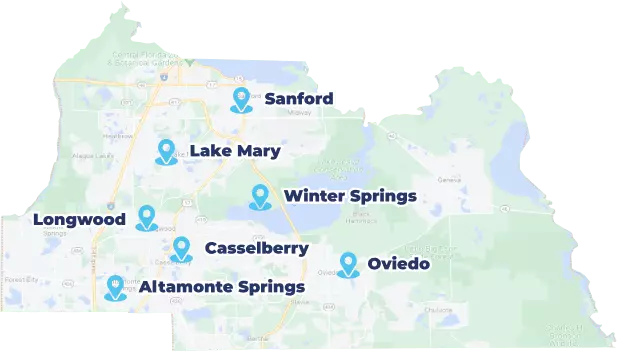
Our office is located at 1757 W. Broadway, Suite 3, Oviedo, FL 32765. We help families throughout Central Florida, including Oviedo, Winter Springs, Casselberry, Sanford, Lake Mary, Longwood, Geneva, and the surrounding Seminole County communities. If you are searching for a trust attorney near you in this area, we would be glad to help.
What is the difference between a revocable and an irrevocable trust?
A revocable trust stays under your control and can be changed or canceled during your lifetime, but it does not protect assets from creditors or taxes. An irrevocable trust generally cannot be changed and takes the assets out of your direct control, in exchange for stronger asset protection and potential tax or benefit advantages. You can read more in our guide on trust vs will.
Does a living trust avoid probate in Florida?
Yes, but only for the assets you actually transfer into it. A revocable living trust avoids probate for property titled in the trust. Anything left out can still end up in probate, which is why funding the trust is so important. See how to avoid probate for more.
Do I need a trust or just a will?
It depends on your goals. A will alone must go through probate, while a trust can pass assets privately and without court involvement. Many families use both, a trust as the core with a pour-over will as a backstop. Our post on who needs a trust instead of a will can help you think it through.
How much does a trust cost in Florida?
The cost depends on the complexity of your estate, the type of trust, and how much funding work is involved. A trust costs more up front than a simple will, but it can save your family significantly more later in probate fees, delays, and lost privacy. We give you a clear, honest estimate before any work begins.
Can I change my revocable trust after it is created?
Yes. As long as you are alive and competent, you can amend or revoke a revocable trust at any time under Fla. Stat. § 736.0602. We cover the details in can a trust be changed in Florida.
What is a special needs trust?
A special needs trust provides for a loved one with a disability without disqualifying them from means-tested benefits like Medicaid or SSI. It has to be drafted carefully to comply with the rules, which is part of our special needs planning work.
Does Florida have an estate or inheritance tax?
Florida does not have a state estate tax or inheritance tax. Very large estates can still face the federal estate tax, and certain trusts can help with that, but most Florida families use trusts to avoid probate and plan for incapacity rather than to reduce state taxes.
The best time to set up a trust is before your family needs it. If you want to protect your assets, keep your affairs private, and spare your loved ones the burden of probate, we can help you do it right. Call Vollrath Law or reach out through our contact page for a free consultation.
This page is for general information only and is not legal advice. Trust and estate outcomes depend on the specific facts of your situation and on current Florida law. For advice about your circumstances, speak with a licensed Florida attorney.
Had the opportunity to utilize this office for estate planning: Last Will and Testament, Power of Attorney, Designation of Health Care Surrogate, and Living Will. We had the pleasure of working with Brian Buck and Melora Vandersluis Esq. The process was very smooth and we utilized a secure portal to review documents and to prepare for questions …

Our experience with Vollrath Law was excellent. We had an initial phone consultation for our will and potential trust, then worked with one of the associates by email until we scheduled our signing appointment. Everyone in the office is friendly and professional and answered all of our questions/ concerns …

Sharon, Stephanie and Amanda are the dream team with title closings for my customers and for me personally. Highly recommend for stress free, efficient and fast mortgage closings for new purchases and refinances in the state of Florida.

We can’t wait to help you tackle your legal challenges and achieve your goals! Our first step is to chat with you and really get to know your unique situation. We’ll listen to your concerns, answer any questions you may have, and create a customized legal strategy that meets your needs and goals.
With our strategy in place, we’ll work with you to bring your legal matter to a successful resolution. No matter what legal challenge your family is facing, we’re here to guide you every step of the way.
We understand that legal paperwork can be overwhelming, but we’ll make it easy and stress-free for you. We’ll help you prepare and file any necessary documents, ensuring that everything is accurate and up-to-date.
In some cases, negotiations and mediation can help resolve legal matters without going to court. We’ll work with you to find common ground and reach a resolution that meets your needs and goals.
Our final step is to help you achieve success and move forward with confidence. Whether it’s a finalized estate plan that provides peace of mind, or a successful divorce settlement that protects your interests, we’re dedicated to helping you achieve your goals and thrive in the future.
A will is a legal document that outlines how you want your assets distributed after you pass away. At the same time, a trust is a legal arrangement in which a trustee manages assets to benefit a beneficiary.
Probate is the legal process of distributing a person’s assets after they pass away. You can avoid probate with a trust, but a will requires probate.
By creating a valid will or trust, you can ensure that your wishes are carried out, and your assets are distributed according to your wishes.
Yes, updating your will or trust periodically is important to ensure it reflects your current wishes.
While it is possible to create a will or trust without an attorney, consulting with an experienced estate planning attorney is recommended to ensure that your wishes are carried out, and your loved ones are protected.