Estate Planning

Losing someone you love is hard enough without a court process on top of it. Yet that is exactly what many Florida families face, because settling a person’s estate usually means going through probate. The paperwork, the deadlines, and the legal language can feel overwhelming at the worst possible time.
Vollrath Law has guided Oviedo and Seminole County families through probate for more than 25 years. We handle the legal and administrative work so you can focus on your family, and we keep you informed at every step so nothing catches you off guard. If you have just lost someone and are not sure what to do next, our guide on what to do after a loved one dies is a good place to start, or you can reach our Oviedo office or request a free consultation online.
Probate is the court-supervised process of settling a person’s estate after they die. It confirms the validity of any will, appoints someone to manage the estate, pays the decedent’s final debts and taxes, and transfers what is left to the rightful heirs or beneficiaries. In Florida, probate is handled in the circuit court of the county where the person lived, which for Oviedo residents is the Seminole County probate court.
Not every asset has to go through probate. Assets that pass by beneficiary designation, joint ownership, or a properly funded trust generally skip it entirely. Probate is for assets that were owned in the decedent’s name alone with no other way to transfer them. When a person dies without a will, Florida’s intestacy laws decide who inherits, which we explain in probate in Florida without a will.
In the first days after a death, a few practical steps make the probate process smoother later. You do not have to do all of this at once, and we can help with any of it.
Florida offers more than one path, and the right one depends mostly on the size of the estate and how long it has been since the death. Choosing correctly can save your family months of time and thousands of dollars. We break down the options in types of probate in Florida.
Formal administration is the full probate process, governed by Chapter 733 of the Florida Statutes. The court appoints a personal representative to manage the estate, notify creditors, inventory assets, pay valid claims, and distribute what remains. It is used for larger or more complex estates and is the most common form of probate. We walk through it in what is formal probate administration in Florida.
Summary administration is a faster, simpler process for smaller estates, governed by Chapter 735. As of a change that took effect July 1, 2026, an estate can qualify when the value of the probate assets, not counting property exempt from creditors, does not exceed $150,000, for deaths on or after that date. Estates of people who died before July 1, 2026 remain under the previous $75,000 limit. Separately, any estate can use summary administration once the person has been deceased for more than two years, regardless of value. We cover the details in summary administration in Florida and the recent increase to $150,000.
For very small estates, Florida allows an even simpler route called disposition without administration. It is reserved for cases where the only assets are exempt property or where the estate assets do not exceed the cost of final illness and funeral expenses. It lets a family recover certain costs without opening a formal probate case at all.
While every estate is different, formal administration generally follows this path. You can also see what happens in probate court for a closer look.
Timing depends on the type of probate and the complexity of the estate. Summary administration can sometimes be completed in a few weeks to a couple of months. Formal administration usually takes closer to six months to a year, in part because Florida requires a creditor claim period after notice is published. Estates with disputes, hard-to-value assets, or tax issues take longer. If speed matters, our post on how to speed up the probate process explains what helps and what does not.
Probate costs generally include court filing fees, the personal representative’s compensation, and attorney fees, all paid from the estate rather than out of your own pocket. Florida law addresses reasonable attorney fees for estate administration in Fla. Stat. § 733.6171. The total depends on the size and complexity of the estate and whether any disputes arise. We break down the numbers in how much does probate cost in Florida and probate attorney fees in Florida.
One of the most common worries families have is whether they will personally inherit a loved one’s debts. In most cases the answer is no. Debts are paid from the estate’s assets during probate, not from the heirs’ own money, and once the estate’s assets are exhausted, most remaining unsecured debts go unpaid rather than passing to family. Part of the personal representative’s job is to notify creditors and pay valid claims in the order Florida law requires. Creditors have a limited window to come forward, and under Fla. Stat. § 733.710 most claims are barred entirely once two years have passed since the death. We explain the details in do I inherit my parents’ debt when they pass away.
The personal representative, sometimes called the executor, is the person responsible for managing the estate through probate. Florida sets rules on who has priority to serve, which we cover in who has priority to serve as personal representative, and the terms mean slightly different things, as we explain in personal representative vs executor. The role carries real legal duties, from safeguarding assets to dealing fairly with creditors and beneficiaries, all detailed in executor responsibilities in Florida.
One thing that surprises many families is that in a Florida formal administration, the personal representative is generally required to be represented by an attorney, unless they are the only interested person. If you have been named to this role, you do not have to figure it out alone, and getting it wrong can expose you to personal liability.
Real estate is one of the most common reasons an estate goes through probate, and one of the trickiest parts to handle. The home may need to be maintained, insured, and eventually transferred or sold. A personal representative can often sell estate property during probate, which we explain in can you sell a house during probate, and heirs frequently ask about selling inherited property in Florida and the transfer of property after death. When a sale or title transfer is involved, we coordinate with our real estate practice so it is handled cleanly. Note that a Florida homestead often receives special protection, which we cover in is homestead property exempt from probate.
Most probate cases are routine, but some are not. Disagreements can arise over the validity of a will, the actions of a personal representative, or the rights of a beneficiary or creditor. These disputes are emotional and legally complex, and they can stall an estate for a long time. Our attorneys handle contested probate matters, whether you need to challenge something that looks wrong or defend an estate against a claim.
For summary administration and very small estates, some families handle probate with limited help. For formal administration, Florida generally requires the personal representative to work with an attorney, and for good reason. The process has strict deadlines, creditor rules, and fiduciary duties, and mistakes can cost the estate money or expose the personal representative personally. A probate lawyer keeps the process on track, protects you from liability, and often moves the estate along faster than going it alone.
Often, yes, with planning done ahead of time. Assets held in a properly funded living trust, accounts with beneficiary designations, jointly owned property, and a Florida lady bird deed for a home can all pass outside of probate. We cover the strategies in how to avoid probate and assets that avoid probate in Florida, and explain what happens when a house is held in a trust. If you want to spare your own family the probate process later, our estate planning team can help you put a plan in place now.
You have options for a probate attorney, so here is what sets our firm apart.
We keep the path forward simple and predictable.
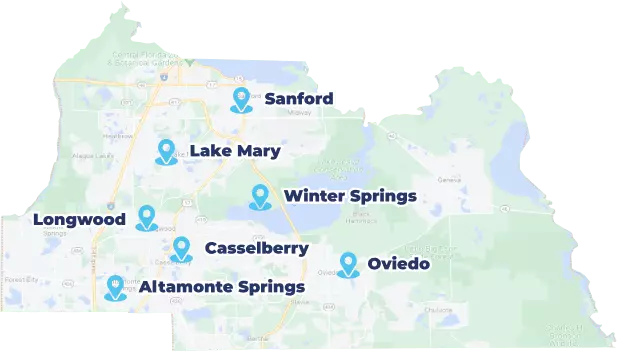
Our office is located at 1757 W. Broadway, Suite 3, Oviedo, FL 32765. We help families throughout Central Florida, including Oviedo, Winter Springs, Casselberry, Sanford, Lake Mary, Longwood, Geneva, and the surrounding Seminole County communities. If you are searching for a probate attorney near you in this area, we would be glad to help.
What is probate?
Probate is the court-supervised process of settling a person’s estate after death. It validates any will, appoints someone to manage the estate, pays final debts and taxes, and transfers the remaining assets to the rightful heirs or beneficiaries.
How long does probate take in Florida?
Summary administration can sometimes finish in a few weeks to a couple of months. Formal administration usually takes six months to a year, largely because of the required creditor claim period. Disputes and complex assets extend the timeline. See how to speed up the probate process for what helps.
How much does probate cost in Florida?
Costs include court fees, the personal representative’s compensation, and attorney fees, all paid from the estate. The total depends on the size and complexity of the estate. We break it down in how much does probate cost in Florida.
What is the difference between summary and formal administration?
Summary administration is a faster, simpler process for smaller estates, generally those with probate assets up to $150,000 for deaths on or after July 1, 2026, or for any estate more than two years after death. Formal administration is the full process, with a court-appointed personal representative, used for larger or more complex estates. More in types of probate in Florida.
Is there a deadline to file for probate in Florida?
The original will must be deposited with the court within 10 days of learning of the death under Fla. Stat. § 732.901. There is no single hard deadline to open administration, but waiting causes problems, and creditors are generally barred from filing claims two years after death.
Do I need a lawyer for probate in Florida?
For formal administration, Florida generally requires the personal representative to be represented by an attorney, unless they are the only interested person. For summary administration and very small estates, less help may be needed, but a lawyer can still prevent costly mistakes.
What happens if there is no will?
When someone dies without a will, Florida’s intestacy laws decide who inherits, usually starting with the spouse and children. The estate still goes through probate. We explain the rules in probate in Florida without a will.
Can you avoid probate in Florida?
Yes, with planning. Assets in a funded living trust, beneficiary designations, joint ownership, and a lady bird deed can pass outside probate. See how to avoid probate.
If you are facing probate, you do not have to navigate it alone. We will handle the process with care and keep your family moving forward. Call Vollrath Law or reach out through our contact page for a free consultation.
This page is for general information only and is not legal advice. Probate outcomes depend on the specific facts of the estate and on current Florida law, including recent statutory changes. For advice about your situation, speak with a licensed Florida attorney.
Had the opportunity to utilize this office for estate planning: Last Will and Testament, Power of Attorney, Designation of Health Care Surrogate, and Living Will. We had the pleasure of working with Brian Buck and Melora Vandersluis Esq. The process was very smooth and we utilized a secure portal to review documents and to prepare for questions …

Our experience with Vollrath Law was excellent. We had an initial phone consultation for our will and potential trust, then worked with one of the associates by email until we scheduled our signing appointment. Everyone in the office is friendly and professional and answered all of our questions/ concerns …

Sharon, Stephanie and Amanda are the dream team with title closings for my customers and for me personally. Highly recommend for stress free, efficient and fast mortgage closings for new purchases and refinances in the state of Florida.

We can’t wait to help you tackle your legal challenges and achieve your goals! Our first step is to chat with you and really get to know your unique situation. We’ll listen to your concerns, answer any questions you may have, and create a customized legal strategy that meets your needs and goals.
With our strategy in place, we’ll work with you to bring your legal matter to a successful resolution. No matter what legal challenge your family is facing, we’re here to guide you every step of the way.
We understand that legal paperwork can be overwhelming, but we’ll make it easy and stress-free for you. We’ll help you prepare and file any necessary documents, ensuring that everything is accurate and up-to-date.
In some cases, negotiations and mediation can help resolve legal matters without going to court. We’ll work with you to find common ground and reach a resolution that meets your needs and goals.
Our final step is to help you achieve success and move forward with confidence. Whether it’s a finalized estate plan that provides peace of mind, or a successful divorce settlement that protects your interests, we’re dedicated to helping you achieve your goals and thrive in the future.
The cost of hiring a probate lawyer in Florida can vary depending on factors such as the complexity of the estate and the attorney’s experience. Some attorneys charge a flat fee, while others charge an hourly rate. Discussing fees upfront with your attorney is important so you have a clear understanding of the costs involved.
In Florida, the estate’s personal representative (also known as the executor) is responsible for paying the probate attorney fees. The fees are paid from the assets of the estate.
In Florida, you have four years from death to file probate. However, it’s important to file as soon as possible to avoid potential complications and to ensure that the estate is administered properly.
While hiring a lawyer for probate in Florida is not required, it is recommended. Probate can be a complex process, and an experienced attorney can guide you through the process, help you avoid potential pitfalls, and ensure that the estate is administered properly.
In Florida, assets titled in a person’s name with a designated beneficiary, such as life insurance policies, retirement accounts, and bank accounts with payable-on-death (POD) designations, are exempt from probate. Additionally, assets held in a living trust are also exempt from probate.
In Florida, an estate must go through probate if valued at $75,000 or more or if the decedent owned real estate in their name. However, there are exceptions to this rule, and it’s important to consult with an experienced probate attorney to determine whether probate is necessary in your specific case.