Estate Planning

For most people, buying or selling real estate is the largest financial transaction of their lives. A small mistake in a contract, a missed title issue, or an undisclosed defect can cost far more than a lawyer ever would. That is why so many Oviedo buyers, sellers, and investors bring an attorney in from the start instead of hoping everything goes smoothly.
Vollrath Law has handled Florida real estate matters for Oviedo and Seminole County clients for more than 25 years. We can serve as your closing agent, review and negotiate your contract, resolve title problems, prepare deeds, and step in when a deal turns into a dispute. And because we are attorneys, not just a title company, we can actually give you legal advice along the way. Reach our Oviedo office or request a free consultation online.
Florida does not legally require you to hire an attorney to buy or sell a home. Many closings are handled by title companies alone. But a title company cannot give you legal advice, cannot tell you whether a contract term protects you, and cannot represent your interests if something goes wrong. An attorney can do all of that, usually for a comparable cost when we also act as your closing and title agent.
An attorney is especially worth it when the deal is anything but simple, such as a sale involving an estate, a divorce, a business, a for-sale-by-owner transaction, title defects, a short timeline, or an out-of-state or foreign party. In those situations the risk of going without legal guidance is real.
A closing is where the transaction becomes final, and it is where problems tend to surface. When we serve as your closing agent, we handle the details that protect you, including these.
Most residential closings come together in a matter of weeks, and the closing appointment itself usually takes an hour or two. Timing varies with financing and title, which we explain in how long closing on a house takes.
A clean title is the foundation of any real estate deal. A title search uncovers liens, judgments, easements, unpaid taxes, or ownership gaps that could threaten your rights as an owner. When we find a problem, we work to clear it before closing, and in some cases that means a court action to resolve a defect or a dispute over ownership, known as a quiet title action.
Title insurance then protects you from claims that were not caught in the search. As your closing and title agent, we handle the title work and give you the legal context a title-only company cannot, so you know what each exception on the policy actually means.
The purchase contract sets the terms for the entire deal, so it is worth getting right before you sign. We review and negotiate contracts, including the common as-is real estate contract, so your inspection rights, deposit, financing contingencies, and deadlines actually protect you. We also help buyers understand closing costs in Florida and the differences that come with a cash purchase.
Florida law protects buyers from hidden problems. Under the landmark case Johnson v. Davis, a seller must disclose facts they know that materially affect the value of the property and that are not readily observable to the buyer. Common examples include past flooding, roof or foundation repairs, and unpermitted work. If a seller hides a known, material defect, the buyer may have a claim after closing. We help buyers evaluate these situations and pursue or defend non-disclosure claims when they arise.
Sellers face their own risks, and the biggest one is often disclosure. The same Johnson v. Davis rule that protects buyers creates a duty for you as a seller, so handling disclosures properly protects you from a lawsuit later. We guide sellers through the contract, disclosures, and closing, whether you are working with an agent or handling a for-sale-by-owner sale. If you are selling a home that is part of an estate, we coordinate with our probate team, since a personal representative can often sell a house during probate with the right steps.
The deed is the document that actually transfers ownership, and the type of deed matters. Each one carries different protections and is suited to a different situation.
Florida also charges a documentary stamp tax when a deed is recorded. Under Fla. Stat. § 201.02, the rate is 70 cents per $100 of the sale price in most of the state, with Miami-Dade County handled differently. We make sure your deed is prepared, taxed, and recorded correctly so the transfer holds up.
Commercial deals carry higher stakes and more moving parts than residential ones. We represent business owners and investors in commercial purchases and sales, lease drafting and review, due diligence, and financing. Whether you are buying a building, signing a commercial lease, or working through zoning and land use questions, we help you understand the risks before you commit and structure the deal to protect your investment.
Buying into a condominium or a homeowners association community adds another layer to the deal. Before you close, it is worth reviewing the declaration, bylaws, budget, and estoppel information, because those documents control what you can and cannot do with the property and what you will owe in assessments. We help buyers understand what they are agreeing to, and we help owners deal with assessment disputes, covenant enforcement, and other association issues.
When a real estate deal goes wrong, the amounts at stake are usually significant. We handle disputes including breach of a purchase or sale contract, boundary and easement disagreements, title defects and quiet title actions, non-disclosure and hidden-defect claims, and conflicts with contractors or neighbors. We aim to resolve these efficiently, through negotiation where possible and litigation where necessary.
When a foreign person sells U.S. real estate, federal law requires the buyer to withhold a portion of the sale price and send it to the IRS. Under the Foreign Investment in Real Property Tax Act, the FIRPTA withholding rate is generally 15 percent of the amount realized, though exceptions and reduced rates apply in certain cases. Getting FIRPTA wrong can create serious problems for both the buyer and the seller, so these transactions need careful handling. We help both sides navigate the withholding rules correctly.
Most deals close without incident, which is exactly why the risks are easy to overlook until they surface. These are the problems we most often help clients avoid or fix.
You have options for a real estate attorney, so here is what sets our firm apart.
We keep the path forward simple and predictable.
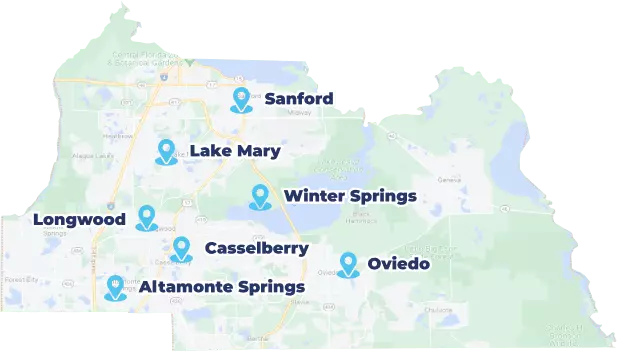
Our office is located at 1757 W. Broadway, Suite 3, Oviedo, FL 32765. We handle real estate matters throughout Central Florida, including Oviedo, Winter Springs, Casselberry, Sanford, Lake Mary, Longwood, Geneva, and the surrounding Seminole County communities. If you are searching for a real estate attorney near you in this area, we would be glad to help.
Do you need a real estate attorney in Florida?
No, Florida does not require one, and many closings are handled by a title company alone. But a title company cannot give legal advice or represent your interests. An attorney can, usually for a comparable cost when we also serve as your closing and title agent, and the protection matters most when the deal is complex.
What is the difference between a title company and a real estate attorney?
A title company can search title, issue title insurance, and handle the closing paperwork, but it cannot give you legal advice or advocate for you. A real estate attorney can do everything a title company does at closing and also review your contract, explain your rights, and step in if a dispute arises.
How much does a real estate attorney cost in Florida?
It depends on the service. For a closing where we also act as the title agent, the cost is often comparable to what a title company would charge, with the added benefit of legal advice. Contract review, dispute work, or complex transactions are quoted based on the work involved, and we are clear about cost up front.
How long does a real estate closing take in Florida?
Most residential closings come together in a few weeks, driven mainly by financing and title work, and the closing appointment itself usually takes an hour or two. See how long closing on a house takes for what affects the timeline.
What does a seller have to disclose in Florida?
Under Johnson v. Davis, a seller must disclose facts they know that materially affect the value of the property and are not readily observable to the buyer, such as past flooding, structural issues, or unpermitted work. Failing to disclose a known, material defect can lead to a lawsuit after closing.
What is a quiet title action?
A quiet title action is a court case used to resolve a defect or dispute in a property’s title, such as an old lien, an unclear ownership record, or a competing claim. It clears the title so the property can be sold or financed with confidence.
Which type of deed should I use?
It depends on the situation. A warranty deed gives a buyer the strongest protection and is standard in sales. A quitclaim deed transfers whatever interest an owner has with no warranties and is common between family members. A lady bird deed can pass a home to heirs outside probate. We help you choose the right one.
Whether you are buying, selling, transferring property, or dealing with a dispute, having an attorney in your corner protects your biggest investment. Call Vollrath Law or reach out through our contact page for a free consultation.
This page is for general information only and is not legal advice. Real estate outcomes depend on the specific facts of your transaction and on current Florida and federal law. For advice about your situation, speak with a licensed Florida attorney.
Had the opportunity to utilize this office for estate planning: Last Will and Testament, Power of Attorney, Designation of Health Care Surrogate, and Living Will. We had the pleasure of working with Brian Buck and Melora Vandersluis Esq. The process was very smooth and we utilized a secure portal to review documents and to prepare for questions …

Our experience with Vollrath Law was excellent. We had an initial phone consultation for our will and potential trust, then worked with one of the associates by email until we scheduled our signing appointment. Everyone in the office is friendly and professional and answered all of our questions/ concerns …

Sharon, Stephanie and Amanda are the dream team with title closings for my customers and for me personally. Highly recommend for stress free, efficient and fast mortgage closings for new purchases and refinances in the state of Florida.

We can’t wait to help you tackle your legal challenges and achieve your goals! Our first step is to chat with you and really get to know your unique situation. We’ll listen to your concerns, answer any questions you may have, and create a customized legal strategy that meets your needs and goals.
With our strategy in place, we’ll work with you to bring your legal matter to a successful resolution. No matter what legal challenge your family is facing, we’re here to guide you every step of the way.
We understand that legal paperwork can be overwhelming, but we’ll make it easy and stress-free for you. We’ll help you prepare and file any necessary documents, ensuring that everything is accurate and up-to-date.
In some cases, negotiations and mediation can help resolve legal matters without going to court. We’ll work with you to find common ground and reach a resolution that meets your needs and goals.
Our final step is to help you achieve success and move forward with confidence. Whether it’s a finalized estate plan that provides peace of mind, or a successful divorce settlement that protects your interests, we’re dedicated to helping you achieve your goals and thrive in the future.
During a real estate closing, you must sign various legal documents, including the purchase agreement, mortgage, and title transfer documents. A real estate attorney can review these documents with you, ensuring that you understand the terms and provisions of each document. They can also help resolve any issues arising during the closing process, such as title disputes or financing issues.
The length of a real estate closing can vary depending on the complexity of the transaction and any legal issues that may arise. Typically, a real estate closing can take a few hours to a few days to complete. A real estate attorney can help ensure the closing process goes smoothly and efficiently, minimizing delays or complications.
Buying a property from a foreclosure sale can be complex, with many potential legal issues. A Florida real estate attorney can help you navigate this process, including reviewing the legal notices and other documents related to the foreclosure, advising you on any legal issues that may arise, and ensuring that your legal rights and interests are protected throughout the transaction.
Florida has specific laws and regulations governing real estate transactions, including rules related to title searches, disclosure requirements, and zoning regulations. Working with a Florida real estate attorney can help ensure you comply with these laws and regulations and avoid legal issues.